

Air Conditioning Repair in Mallorca
A system that has stopped in August is an urgent problem, and it is also the moment people spend money badly. Describe the fault and the property and we pass the request to air conditioning and heat pump companies that work in your area. Below is what is usually wrong, and what is worth checking before anybody drives out.
request describes the job
companies see it
for you, always
obligation to accept
What is usually wrong
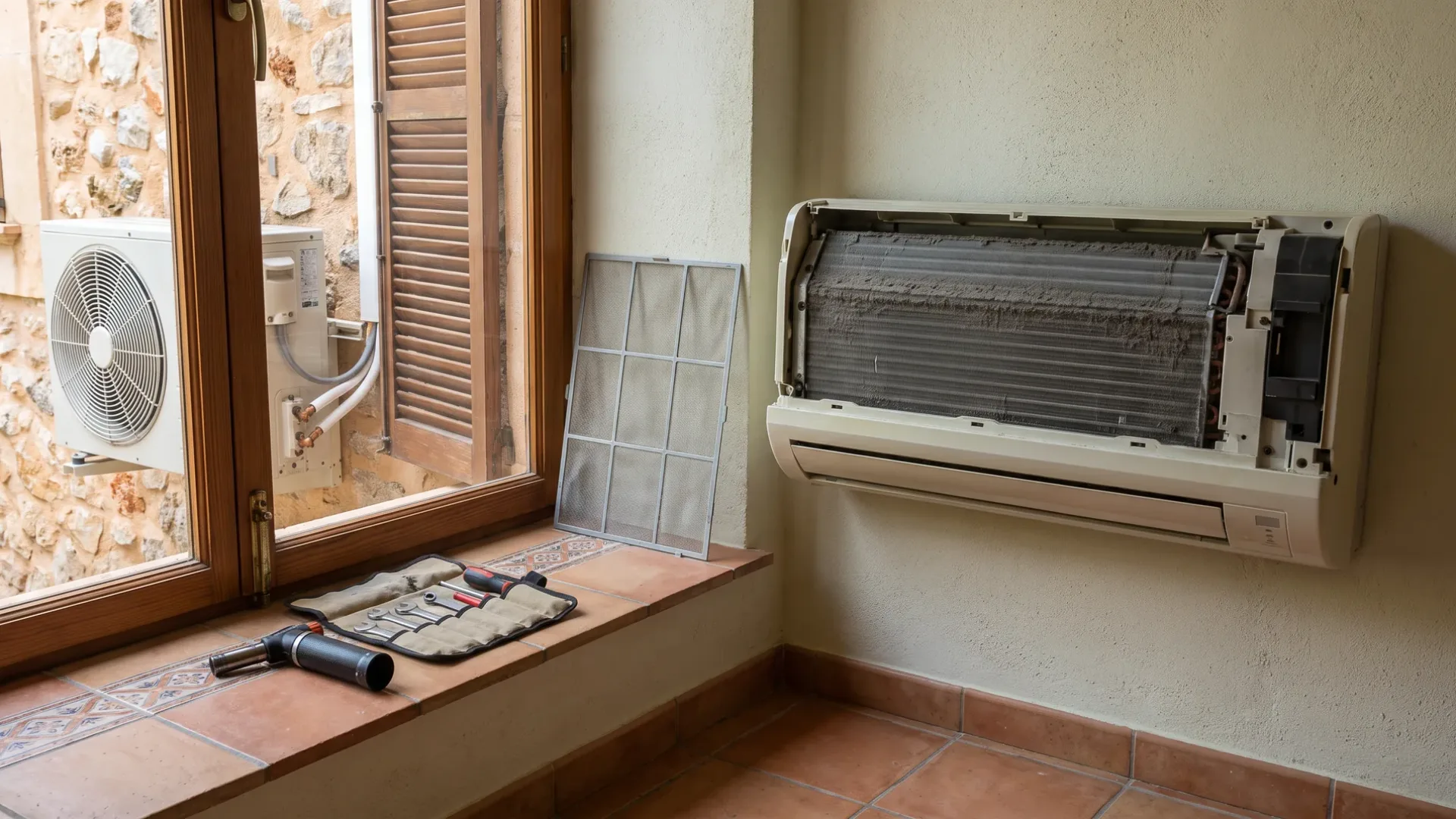
Most faults fall into a short list. The system runs but does not cool, which usually means it has lost refrigerant, the outdoor coil is choked, or the filters have not been touched in years. It runs and then stops, which points at overheating, a blocked drain triggering a safety switch, or an electrical fault. It does nothing at all, which is often supply or a control board rather than the expensive parts. Or it works and drips, which is nearly always the drain.
A loss of refrigerant deserves its own line, because it is the fault people misunderstand most. Refrigerant is not consumed. A system that is low has a leak, and topping it up without finding that leak buys a season at most and vents gas that should not be vented. A company that offers a top-up without mentioning the leak is telling you something.
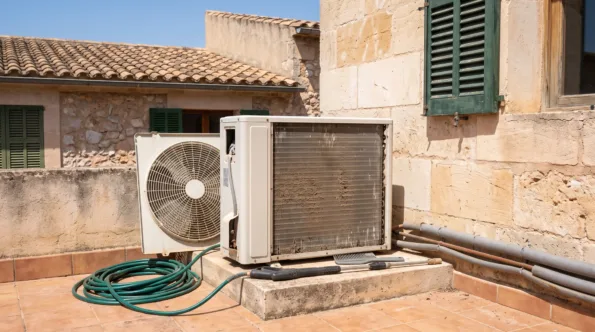
The other pattern worth knowing is that most August failures are February omissions. Coils choked with salt and dust, a drain that has been silting up for two years, and filters nobody has washed do not fail on a mild day. They fail on the day the system is asked for everything it has.
Worth checking before you call anybody
None of this needs tools, and any of it can turn a call-out into a five-minute fix.
- The filters in the indoor unit, which lift out and wash
- That the outdoor unit is not blocked by furniture, plants or a cover left on
- That nothing is standing in front of the airflow, indoors or out
- The breaker for the unit, and any isolator switch beside the outdoor unit
- The batteries in the remote, and whether the mode is heating rather than cooling
- Whether the drain outlet outside is dripping when it should be
- Doors and windows, since a system holding a room against an open terrace door will lose
How a repair visit usually goes
Knowing the sequence makes it easier to tell a thorough visit from a quick one.
-
01
Symptoms and history
What it does, when it started, and what has been done to it before. A system repaired twice in two years is a different conversation from one that has never faulted.
-
02
Measurement, not guessing
Pressures, temperatures and electrical readings. A diagnosis without measurements is an opinion, and it is how the wrong part gets replaced.
-
03
Cause, not just symptom
Low refrigerant means a leak. A tripping safety switch means something is making it trip. Fixing the symptom on either of those brings the engineer back.
-
04
A price before the work
What is wrong, what it takes to fix it, and what it costs, agreed before anybody starts. If the fix is a large share of a new system, that is worth saying out loud.
-
05
Repair or advise against it
On an old system with a bad leak or an obsolete refrigerant, the honest answer is sometimes that the money is better spent replacing it.
When a repair stops being worth it
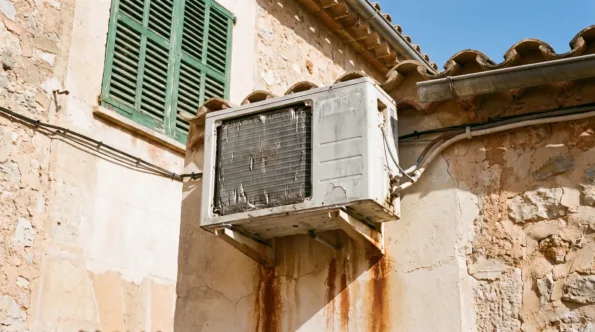
This site is not here to sell repairs, so it is worth being direct. A single fault on a system that has otherwise been reliable is almost always worth fixing. A third fault in two summers, on a system old enough to use a refrigerant that is no longer produced, usually is not, and the repair simply moves the decision to next year at the cost of this year.
The awkward middle case is a compressor. It is the expensive component, and replacing one on an ageing system is often close enough to the cost of new equipment that the new equipment wins on efficiency alone. Ask for both figures rather than only the repair, and compare what each one leaves you with.
If the answer turns out to be replacement, that is a different request and a different page. It is also a better moment than most to fix whatever was wrong with the original installation.
Related
How your request reaches a company
Mallorca Climate Control is a comparison service. A request for an air conditioning repair goes to the air conditioning and heat pump companies on our list; they quote the work and carry it out, and any agreement is between you and the company you pick.
-
01
Describe the job
Tell us the property, roughly what you want and where it is. Photographs and a rough plan help, though neither is required.
-
02
We match it
The request goes to companies that work in your area and take on this kind of job at this size.
-
03
They quote you
Each company contacts you directly with its own price, timing and approach. We do not set any of it.
-
04
You compare and choose
Put the quotes side by side and take the one you want, or none of them. Using the site costs you nothing.
My air conditioning runs but does not cool. What is wrong?
The three usual causes are lost refrigerant, an outdoor coil so dirty it cannot reject heat, and filters that have not been cleaned. The first needs an engineer, and the other two are partly preventable. If it cooled well last summer and does not now, something has changed rather than worn out, and a leak is the most common answer.
Can refrigerant just be topped up?
It can be added, but a system that is low has a leak, because refrigerant is not consumed in normal running. Adding gas without finding the leak means paying again next season and releasing gas that should be contained. A proper repair finds it first.
Why is water dripping from the indoor unit?
Almost always the condensate drain. Cooling air produces water, that water has to run away, and a drain that has silted up or lost its fall backs up into the unit and then into the ceiling or the wall. It is a common fault and usually a straightforward one, and it is much cheaper before the plaster is stained.
Is it worth repairing a system that is fifteen years old?
It depends on the fault and on the refrigerant, not on the age alone. A simple electrical fault on an old but well-installed system is worth fixing. A leak on a system charged with a gas no longer produced is where most people find that the repair is a way of postponing the decision.
What can I do while I wait?
Close the shutters on whatever side the sun is on, keep doors and windows shut in the rooms you are trying to hold, wash the filters, and clear anything blocking the outdoor unit. It will not fix a fault, and on a marginal system it is sometimes the difference between uncomfortable and unbearable.
Get air conditioning repair quotes
Describe the fault and the system once, and let several companies tell you what they would do.