

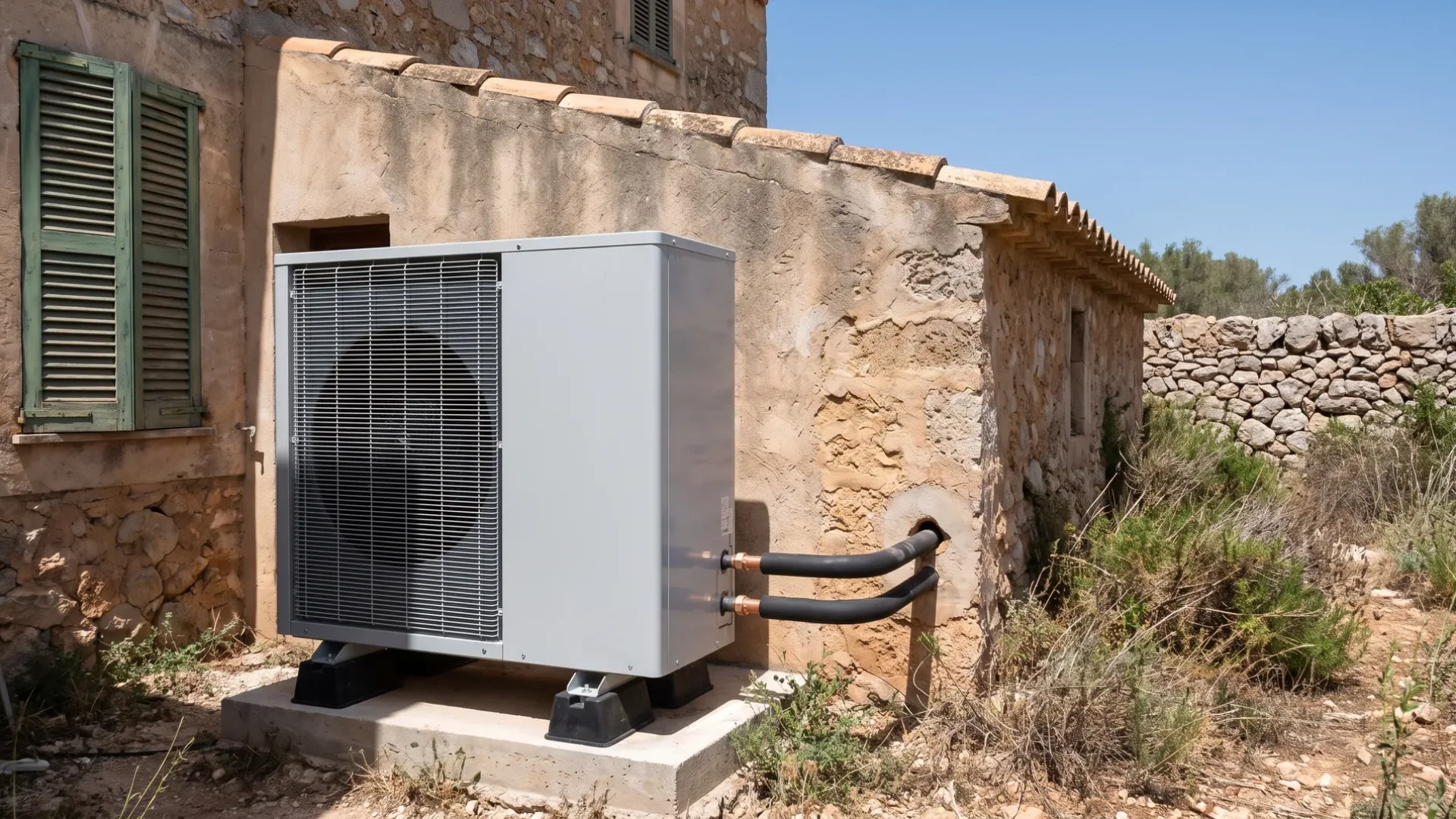
Heat Pump Installation in Mallorca
A heat pump moves heat rather than making it, which is why one machine can cool a property in August and warm it in February. On an island with a short, damp winter that is often the whole heating argument. Describe the property and we pass the request to air conditioning and heat pump companies that install them.
request describes the job
companies see it
for you, always
obligation to accept
What a heat pump is, in plain terms
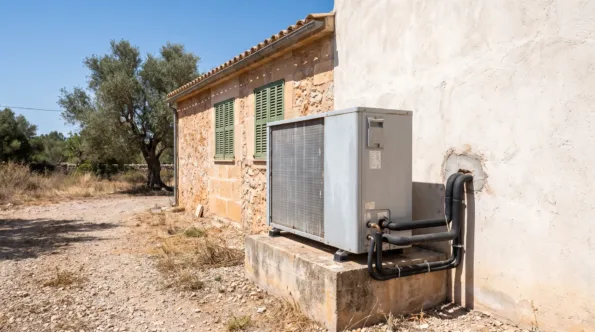
It takes heat from outside air and puts it inside, or takes heat from inside and puts it out. Because it is moving heat rather than burning something to create it, the energy it delivers is a multiple of the electricity it uses. That multiple falls as the outside temperature falls, which is why heat pumps are argued about in northern Europe and are far less controversial here.
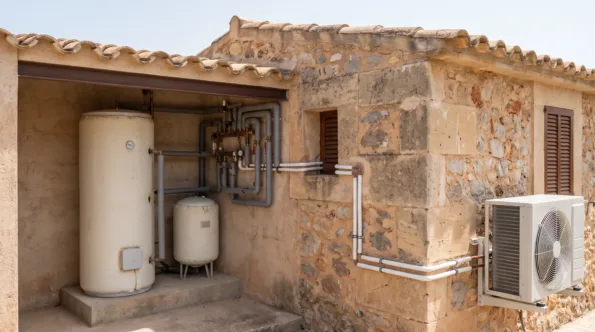
The confusing part is the vocabulary. A reversible split system is already a heat pump: it heats as well as it cools. What people usually mean by a heat pump installation is a larger unit feeding water rather than air, which then runs to underfloor pipes, radiators, fan coils and often the hot water cylinder as well.
That distinction decides everything else. An air-to-air system conditions rooms and does it quickly. An air-to-water system heats the fabric of the building, is slower to respond and pairs naturally with a floor. Neither is better; they answer different questions.
Where a heat pump tends to make sense here
- A property occupied through the winter rather than only in season
- Stone or masonry that is slow to warm and holds it once warmed
- Heating currently done by electric panels, oil or bottled gas
- A renovation, when the floors are coming up anyway
- A property that wants heating and cooling from one system rather than two
- Somewhere the hot water is worth generating from the same machine
- A building with somewhere sensible to stand an outdoor unit
How a heat pump installation usually runs
Longer than an air conditioning installation, because it touches the heating system as well as the rooms.
-
01
Survey and heat loss
What the building loses, room by room, and what it is currently heated by. This is the step that decides the size, and skipping it is how properties end up with a machine that never keeps up.
-
02
Choosing what it feeds
Underfloor, radiators, fan coils, or a mix. Each wants a different water temperature, and that temperature is what determines how efficiently the whole system will run.
-
03
Position and services
Where the outdoor unit stands, where the cylinder and the buffer go, and whether the electrical supply carries the load. Space indoors is a more common obstacle than space outdoors.
-
04
Installation
Outdoor unit, pipework, cylinder, controls, and whatever heat emitters are being installed or reused.
-
05
Commissioning
Flow temperatures set, curves configured and the system run under load. A heat pump that is commissioned lazily costs money every day it runs.
-
06
Handover
How the controls work, what to leave alone, and the paperwork for the electrical connection.
The mistakes that cost people money
Running it like a boiler is the first. A heat pump is most efficient holding a steady temperature at a low flow, not being switched off and asked to catch up twice a day. Owners who set it like a gas boiler often conclude the machine is expensive, when the schedule is.
Oversizing is the second, and it is common. A unit larger than the building needs spends its life starting and stopping, which is where wear happens and where efficiency is lost. The heat loss calculation is what protects against it, and it is worth asking to see.
The third is a mismatch between the machine and what it feeds. Existing radiators sized for a boiler need much hotter water than a heat pump wants to produce. They can be reused, but the flow temperature that makes them work is the flow temperature at which the heat pump stops being efficient. That trade should be named in the quote rather than discovered in January.
Often decided at the same time
Underfloor heating
Heating and cooling systems
Smart climate control
How your request reaches a company
Mallorca Climate Control is a comparison service. A request for a heat pump installation goes to the air conditioning and heat pump companies on our list; they quote the work and carry it out, and any agreement is between you and the company you pick.
-
01
Describe the job
Tell us the property, roughly what you want and where it is. Photographs and a rough plan help, though neither is required.
-
02
We match it
The request goes to companies that work in your area and take on this kind of job at this size.
-
03
They quote you
Each company contacts you directly with its own price, timing and approach. We do not set any of it.
-
04
You compare and choose
Put the quotes side by side and take the one you want, or none of them. Using the site costs you nothing.
Are heat pumps suitable for Mallorca?
The climate is close to ideal for them. The efficiency of an air source heat pump falls as the outside air gets colder, and the coldest weather here is mild by the standards of the countries where that argument is had. The harder question is usually not whether the machine will work but whether the property has anywhere sensible to put the outdoor unit and the cylinder.
Is a heat pump better than air conditioning?
They are not the same choice. Reversible air conditioning conditions rooms quickly and is the cheaper way to add cooling with some winter warmth. An air-to-water heat pump heats the building properly, runs underfloor pipes and can make the hot water, and it costs more to install. A property occupied all winter usually leans one way; a summer property leans the other.
Can a heat pump replace an existing boiler?
Often, but not always by swapping one box for another. The question is what the existing radiators need in order to heat the rooms. If they were sized for very hot water, either they get larger or the flow temperature stays high and the efficiency drops. A company should tell you which of those it is assuming.
Does it work with underfloor heating?
That is the pairing heat pumps are happiest in. Underfloor pipes cover a large area, so they warm a room using water that is barely warm to the touch, and low flow temperature is exactly where a heat pump is most efficient.
How noisy is the outdoor unit?
It runs a fan, so it is not silent, and it runs longest on the coldest nights. Position solves most of it: away from bedroom windows, off a resonant surface, and not boxed into a space with no airflow. Enclosing one to hide it is the usual way to make it louder and less efficient at the same time.
Get heat pump installation quotes
Describe the property once and let several companies price it against the same brief.