

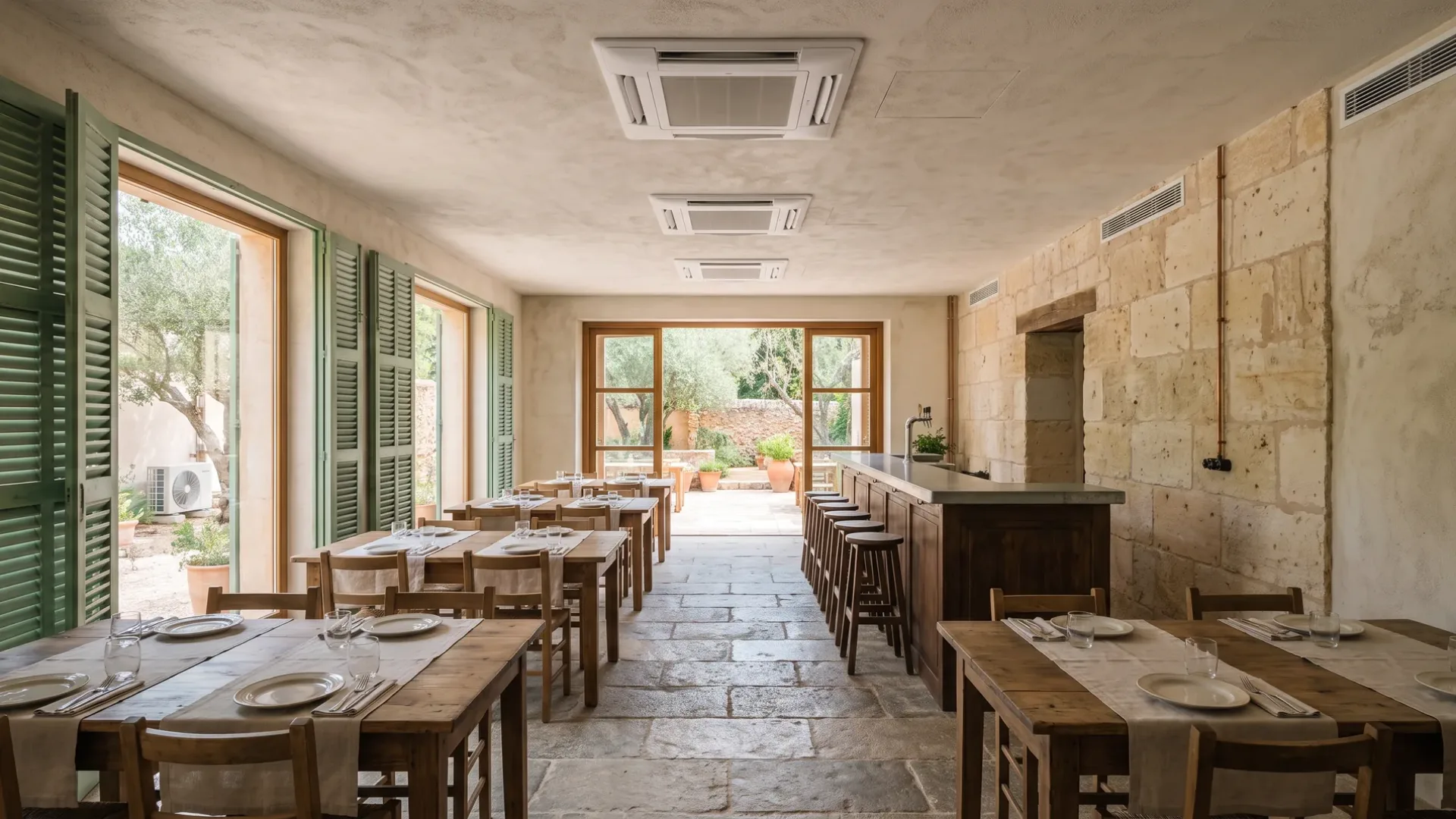
Climate Control for Restaurants and Bars
A restaurant is a room where one end is a hot kitchen pushing heat and steam through a doorway, the other end opens onto a terrace all evening, and guests in the middle expect to be comfortable on a full belly. The load is people, the doorways are constant, and the extraction that leaves is air that has to come from somewhere else. Describe the premises and we pass the request to air conditioning and heat pump companies that take on hospitality work.
request describes the job
companies see it
for you, always
obligation to accept
Kitchen heat is the thing that matters
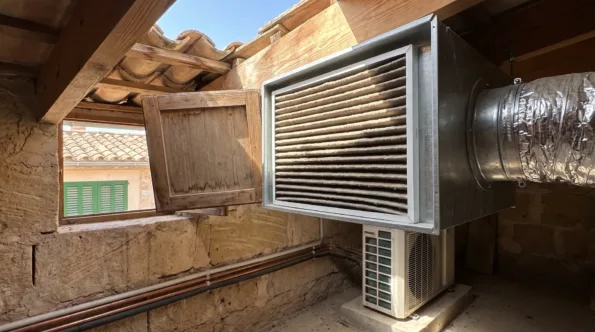
The pass is a doorway that acts like a loudspeaker, not a barrier. Heat from the kitchen flows into the dining room continuously, carrying steam and cooking smell with it. A system sized on the square metres of the dining room will be running at full output by early service and behind for the rest of the evening, because the actual load is the kitchen heat it is fighting as well as the people and glazing.
The extraction that removes this heat has to be replaced with air from somewhere. If that air comes from outdoors it has to be conditioned, and that is work. If it comes from the dining room it has been conditioned already and the system has to do it again. The interaction decides how hard the system has to work and how much of its cost is hidden in extraction routing rather than in coil size.
Getting the extraction right is the thing worth discussing before the plant is chosen. A brief that says “we need a new air conditioning system” without mentioning the kitchen or the routing is missing the half that decides what system will be quiet and effective rather than loud and chasing its tail.
What restaurant and bar climate control has to balance
- Kitchen heat and the doorway it travels through
- Extraction that has to go somewhere rather than vanish
- Air to replace what is extracted, without wasting conditioning
- Glazed frontage and terrace doors opening all service long
- A full room behaving nothing like an empty one at sizing
- Noise from the system and from outside carrying onto the terrace
- A thermostat that guests and staff should not be able to reach
- Work that has to happen at night or between services
- Plant that must not be seen from the street or the terrace
- A staff member who can operate it without a manual beside them
How a restaurant project usually has to run
The survey is more about the kitchen and the doors than about square metres.
-
01
Understand the kitchen
What it cooks, how many covers it handles, whether there is a ventilation hood and where the extracted air goes now. This is the load that decides everything else.
-
02
Trace the extraction and make-up
Where the kitchen air leaves, where the replacement air comes from, and whether it has to be conditioned before the dining room sees it. This is often the expensive part.
-
03
Size for the full service
Not an average hour but a full service with all covers and all equipment running. The system sized for a half-full restaurant will be struggling by the time the place fills up.
-
04
Plan the work window
Lunch service, dinner service, or between them. If work has to happen in the evening it takes longer and costs more. Using a closed day or the quiet season is where the better quotes come from.
-
05
Balance noise and load
A larger, quieter system running partly loaded is worth discussing against a smaller system running harder. A terrace where the unit is audible half the evening is a cost every night.
-
06
Commission when it is full
A system balanced with forty empty seats is not balanced at all. The first busy service is where it matters, and it is worth planning to be present for adjustments.
Getting the extraction and make-up right is harder than it sounds
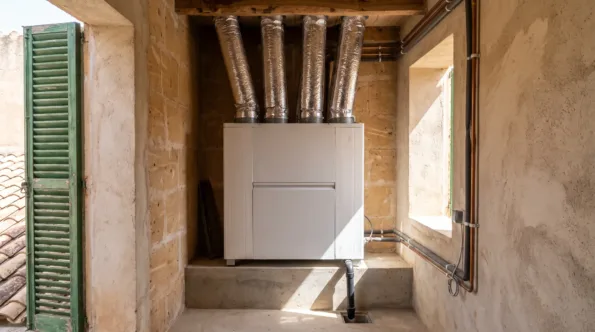
A kitchen hood removes air, and that air has to come from somewhere else or the kitchen becomes a vacuum and the hood stops working. It can come from the dining room, in which case the dining room is losing conditioned air. It can come from outside, in which case it has to be conditioned before the dining room sees it. It can come from outside through the extraction ducting, in which case the ducting has to be designed to do that and the kitchen can get smelly because it is half outside. Each answer is a different job and a different price.
The simplest-sounding answer, making up the air from the dining room itself, is often the most expensive because the system is spending energy twice: once to condition the air and again to replace what the hood is removing. A brief that does not mention this interaction usually leads to a quote for the smaller problem and a bigger surprise when the larger one becomes visible mid-service.
A terrace makes it worse. A door that opens every two minutes is removing air from the dining room, so a hood is also making up not just for the extraction but for the terrace air too. This is why some restaurants run themselves into a corner with the doors open and the system running flat out, when the real answer is to rethink the extraction and the make-up.
Related
How your request reaches a company
Mallorca Climate Control is a comparison service. A request for a restaurant or bar climate control project goes to the air conditioning and heat pump companies on our list; they quote the work and carry it out, and any agreement is between you and the company you pick.
-
01
Describe the job
Tell us the property, roughly what you want and where it is. Photographs and a rough plan help, though neither is required.
-
02
We match it
The request goes to companies that work in your area and take on this kind of job at this size.
-
03
They quote you
Each company contacts you directly with its own price, timing and approach. We do not set any of it.
-
04
You compare and choose
Put the quotes side by side and take the one you want, or none of them. Using the site costs you nothing.
Is kitchen extraction a climate control problem or a ventilation one?
Both. Extraction removes heat and moisture from the cooking area. Make-up air to replace it is how the rest of the building stays habitable and how the kitchen hood stays effective. The two are a single system, not separate jobs, and a brief that treats them as separate usually ends up solving one and not the other.
Can the work be done while we are open?
Usually in phases, and it takes longer and costs more. A rooftop unit and ducting can go in during service in blocks, but noisy work like cutting and boring goes at night or between services. Ask the company whether the programme it is assuming includes time for that or assumes a closed building.
How big should a system be for a restaurant?
It is sized on the load at a full service, which is mostly heat from the kitchen and the people in it. A 100-cover restaurant does not need a 100-cover system; a system might be as large as one that would condition 300 covers standing around doing nothing, because the kitchen heat is that significant. Ask whether the quote is based on a full service or an average one.
What controls should be where?
The thermostat should be somewhere only staff can reach, not where a guest can change it between courses. Some restaurants like to zone the dining room separately from the bar, or control the terrace differently from the inside. This should be in the spec before the system is chosen, because it changes what is needed.
Is an air curtain worth fitting?
An air curtain at the terrace door helps, but it is supplementary rather than a solution. It reduces the amount of outside air the door opening pulls into the room, but it does not replace a system sized to handle the load the door actually adds. Think of it as a tool that makes an oversized system not ridiculous rather than a replacement for sizing correctly.
Get quotes for restaurant and bar climate control
Describe the premises, the kitchen and the service pattern, and let several companies price the same brief.