

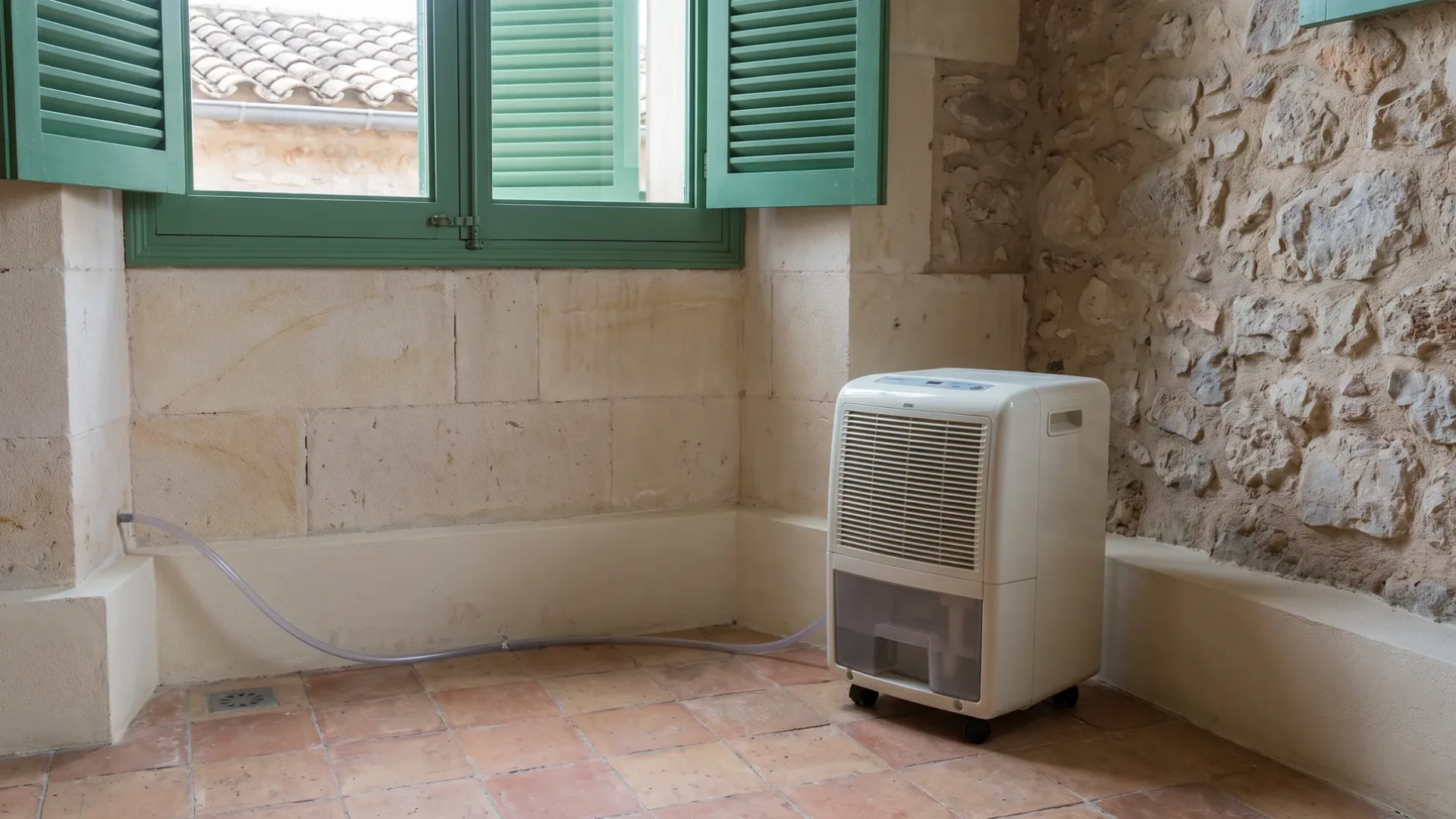
Dehumidification
A dehumidifier is a machine that takes water out of the air passing through it and hands the air back drier. It is the answer when ventilation cannot remove moisture as fast as it is being made, or when outside air is too humid to use for ventilation, or when a property stands empty and needs protection over months. Unlike ventilation, which brings in fresh air, a dehumidifier returns the same air to the room once it has been dried. Describe the building and the situation, and let air conditioning and heat pump companies help you choose between portable and fixed machines and quote the installation.
request describes the job
companies see it
for you, always
obligation to accept
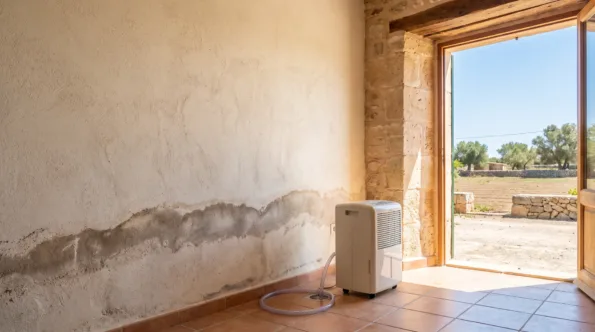
Portable machines and where to put them
A portable dehumidifier is a box that sits in a room, pulls air through itself, and pushes it back dry. The water it removes has to go somewhere. Some machines have a tank you empty by hand. Some have a permanent drain to a sink or floor waste. The tank ones need emptying every day or two in a damp room, which is why they are usually rented or borrowed for a crisis rather than run permanently.
A permanent drain means the machine can run on its own as long as the drain stays clear. But permanent drains can silently block, and a machine running with a blocked drain is just recirculating warm air and using electricity without reducing moisture. A drain blocked by algae or debris often does not announce itself until the room gets wet again.
Portable machines are usually sized for one room: maybe a bedroom or bathroom. Running them in a whole house requires several machines or daisy-chaining them with ducts. That works, but at a cost to noise and electricity. Portable machines are usually the answer for temporary dampness or for one specific room, not for a whole property.
What shapes a dehumidification approach
These factors decide whether portable, fixed, or the combination of both is right for a building.
- How much water the air is holding and how fast it is being made
- Whether the damp is in one room or throughout the building
- How long the damp is expected to last, whether it is seasonal or permanent
- What the building does in summer on a warm humid afternoon (coastal air can be wetter than the building)
- The cost of running a machine continuously versus the cost of water damage
- Where the drainage can go without opening walls or floors
- Whether the machine is for winter protection or summer comfort
- Access to service and drain cleaning if a permanent drain is used
- What happens when the property stands empty for months and the machine breaks down
How to think about a dehumidification approach
The right strategy depends on the building and the problem.
-
01
Understand where the water is coming from
Water made indoors can be removed by ventilation if it is extracted at the source. Water arriving through structure or on humid afternoons needs dehumidification because ventilation cannot solve it. Empty properties need a different answer because there is no moisture being made indoors at all.
-
02
Size the machine to the space and the load
A dehumidifier is rated by how much water it removes per day under certain conditions. A damp bedroom might need a 20-litre machine. A damp cellar might need a 50-litre machine. A whole house usually needs multiple machines or a fixed system. Sizing it too small means it runs all the time and uses electricity without drying the space. Sizing it too large wastes electricity.
-
03
Decide on drainage
A tank machine is easier to install but requires emptying. A machine with a permanent drain to a sink or floor waste is automated but the drain has to be maintained. Some machines have a small pump that can raise water to a height if there is no gravity drain available. The drainage you choose determines how much maintenance matters.
-
04
Plan for continuous monitoring
A machine that dries a room only works while it is running, its drain is clear, and its tank is not full. All three of those need to be true or the room starts getting wet again. For a property that is only visited occasionally, a machine that reports its status back is worth the extra cost.
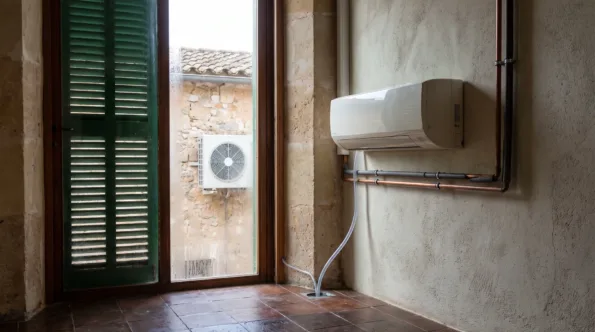
Running costs and the behaviour question
A dehumidifier uses electricity, and running one costs money. How much depends on the machine size, how long it runs, and your electricity rate. A larger machine often uses less electricity per unit of water removed, because of the way the mechanical cycle works. But it also costs more to buy and install.
The bigger cost driver is how long the machine has to run. A room that is wet because it was closed over winter for one month runs a machine for one month and then turns it off. A room that is wet because the building is made of water-absorbent material that never fully dries runs a machine all summer and then part-time all year. The reason matters more than the machine size.
This is why understanding the source of moisture is the first step. A leak or rising damp is a builder problem, not an electricity problem. A humid afternoon in summer with windows closed is a ventilation choice. An empty house in winter is a closed building problem. Each one has a different answer, and running a dehumidifier continuously is the expensive solution to every one of them because they are actually different problems.
The related decisions
Humidity control strategy
Ventilation as the first answer
Protecting an empty property
Why humidity matters
Air conditioning and moisture
How your request reaches a company
Mallorca Climate Control is a comparison service. A request for a dehumidification installation goes to the air conditioning and heat pump companies on our list; they quote the work and carry it out, and any agreement is between you and the company you pick.
-
01
Describe the job
Tell us the property, roughly what you want and where it is. Photographs and a rough plan help, though neither is required.
-
02
We match it
The request goes to companies that work in your area and take on this kind of job at this size.
-
03
They quote you
Each company contacts you directly with its own price, timing and approach. We do not set any of it.
-
04
You compare and choose
Put the quotes side by side and take the one you want, or none of them. Using the site costs you nothing.
Should I buy a portable dehumidifier or have one installed?
Portable is cheaper upfront and easier to move or remove. Fixed installation is more automated and costs less to run if it is permanent. If the damp is temporary, rent a portable one. If it is going to run for months, fixed installation is usually worth the cost. If you have one room with a problem, portable. If the whole building is wet, fixed.
What size dehumidifier do I need?
Machines are rated by how many litres a day they pull out of the air. A single damp room wants a smaller one than an open plan floor, and a whole house is usually more than one machine rather than one large one. Sizing depends on how damp the room is and how cold it is, because cold air holds less water than warm air. Get a quote that includes a proper assessment, not a guess.
What happens to the water?
A tank machine you empty by hand. A machine with a permanent drain pushes the water to a sink, a floor waste or a pump that can move it uphill. The drain can silently block with algae or debris, so permanent drains need to be checked regularly. A few machines have a small pump that moves the water to a height if there is no gravity drain.
Can I run a dehumidifier in an empty house over winter?
Not without electricity and monitoring. A machine sitting in an empty house will run its tank full, stop, and then the room will get wet again. Running a machine all winter costs electricity with nobody there to benefit. What an empty property needs is a different strategy, which is covered on the second homes page.
Will a dehumidifier make the air cold?
Dehumidifiers work by cooling the air below its dew point, condensing water out, and then warming it back up. The air coming out is usually slightly warmer than the air going in, which is why they also heat a room slightly. That is the opposite of air conditioning, which cools the air permanently.
Get dehumidification quotes
Describe the building and the moisture problem, and let several companies price portable and fixed options for your situation.