

Ventilation Systems
A sealed building holds the air it makes: cooking smells, cooking moisture, bathroom steam, the damp that comes simply from living somewhere. Ventilation is the equipment that decides when that air goes out and what comes in to replace it. The options range from a single extract fan over a stove to a system supplying fresh air to every room and recovering heat from what it throws out. Which one a property actually needs depends on the diagnosis, not the list. Pass that to air conditioning and heat pump companies that quote and install ventilation systems.
request describes the job
companies see it
for you, always
obligation to accept
Why airtight buildings need ventilation on purpose
An old finca ventilates itself. Loose shutters, single-pane wooden frames, an open fireplace and gaps under doors move a great deal of air without anybody planning for it. A household makes moisture by cooking, drying clothes and showering, and that moisture rides out on that air. Seal those gaps and you keep the heat in during winter and the cooling in during summer. You also keep the moisture in.
A modern renovation or a new building seals those gaps deliberately. Double or triple glazing, fitted shutters, proper weathersealing and closed ducts for appliances all improve efficiency. They also create a choice that did not exist before: what happens to the air the people inside are breathing? The answer comes from ventilation equipment rather than from openable windows and blocked chimneys.
That is the difference this page is about. A property with loose windows needs a fan in the bathroom and the kitchen to move moisture out at peak times. A property with tight windows needs a system that runs continuously at low speed, bringing fresh air to the living spaces and pulling stale air out of the wet rooms, because the building will not do either of those on its own.
The equipment types explained
What each system does and does not, from smallest to most complex.
- Single-room extract: pulls moisture out of one room when you run it, usually controlled by hand or by a humidity sensor
- Continuous low-level extract: runs quietly in the background in a wet room, moves a steady small flow, usually controlled by humidity or time
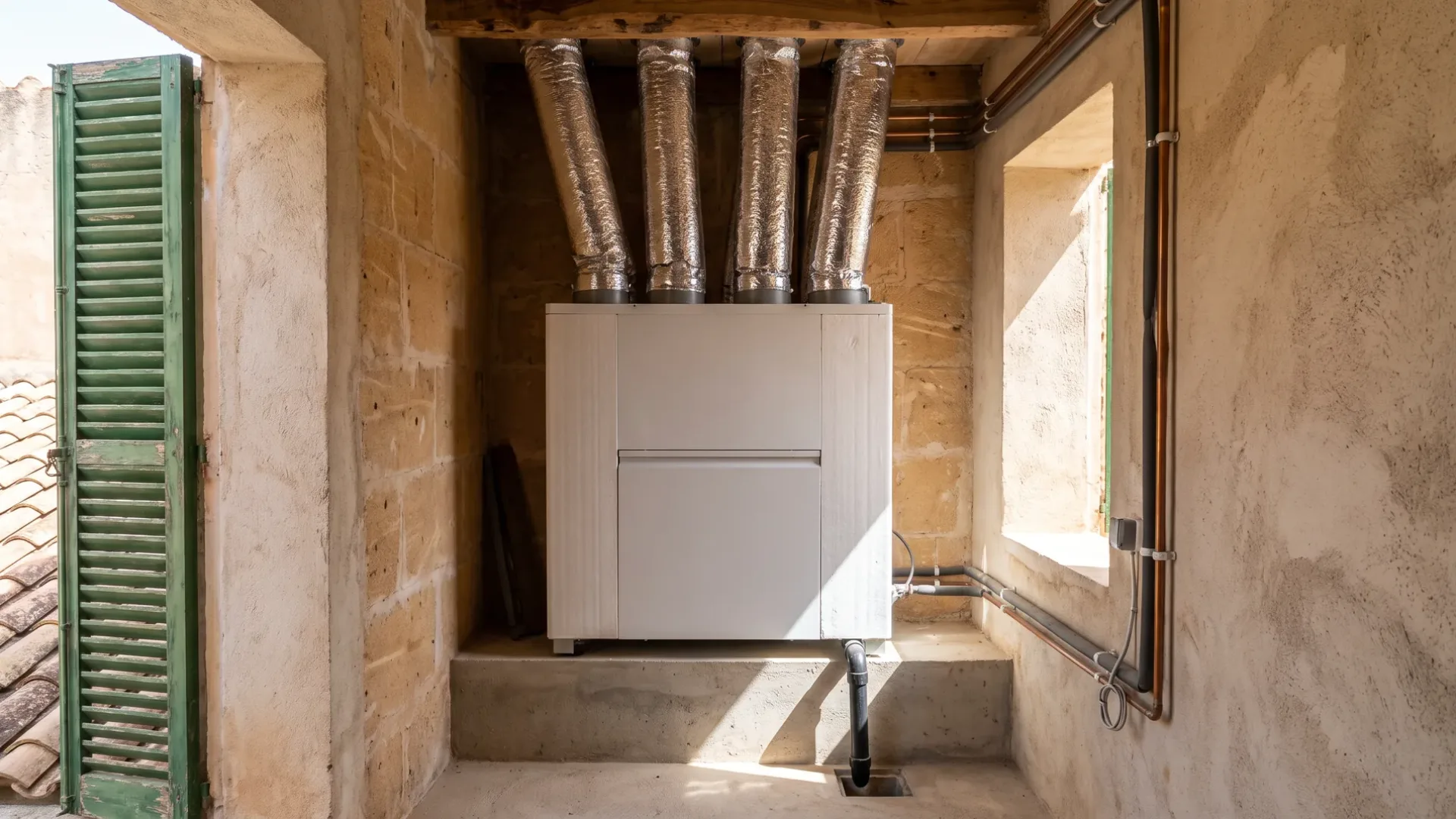
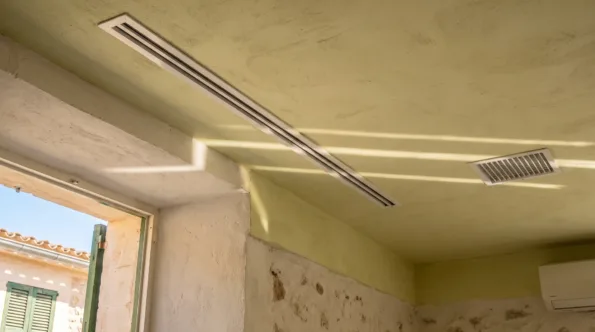
- Whole-floor supply and extract: brings fresh air to bedrooms and living rooms, pulls stale air from bathrooms and kitchens, can recover heat from the exhaust
- Heat recovery ventilation: captures warmth from outgoing air and passes it to incoming fresh air, more efficient on cold days, the fans must be balanced
- Demand-controlled ventilation: reads humidity or CO2 and raises the flow when it matters, lowest running cost but needs a sensor and a control box
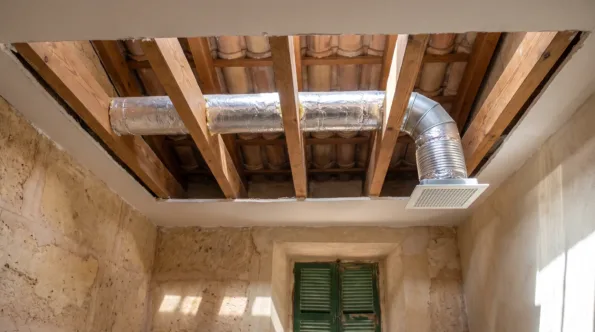
- Ducted supply: brings outside air into a room where there is otherwise nothing moving it, often used with passive extract (open trickle vents)
- Positive input ventilation: pressurizes a space with filtered outside air, forces a steady exchange, works differently from a suction-based system
How to choose the type for a property
The equipment follows the diagnosis, not the other way around.
-
01
Where is the moisture coming from?
Moisture made indoors (showers, cooking, drying clothes) wants removal at the source, by extract fans in the rooms where it is made. Moisture arriving through a wall or floor is a building problem, and ventilation does not fix it. The diagnosis decides everything after this.
-
02
How much moisture is a problem?
A bathroom that steams up for thirty minutes after a shower is different from one that is damp all day. A kitchen that has a smell after cooking is different from one that has visible condensation on the glass. The scale of the problem drives the equipment size and how it runs.
-
03
Will the property stand empty for months?
Passive ventilation and most extract fans do nothing when nobody is there to decide to run them. A heat pump or air conditioning system does remove some water while it is cooling, but only incidentally. An empty property is covered on the second homes page rather than here, because the problem changes entirely.
-
04
Is the building airtight or loose?
This determines whether continuous running at low speed makes sense or whether it would waste energy. An old loose building with hand-controlled spot extraction is most efficient. A new tight building with a continuous system is most efficient. Trying to mix the two usually pleases nobody.
What equipment cannot do
Ventilation only dries a room while the incoming air is drier than the air going out. On a warm afternoon near the coast, outside air is often as humid as inside air or more so. Opening the windows on such a day can make a sealed room wetter rather than drier, because warm outside air cools as it enters and water condenses on the cooler inside surfaces. That is why a humidity strategy is more complicated than equipment alone.
Ventilation also does nothing about air that is already stale. If a room smells of old cooking or feet or a cat that lives there, bringing in outside air dilutes it but does not remove it. A dehumidifier also does not remove it. Neither does air conditioning. Activated carbon or other chemical filtration addresses that, which is a separate specification from ventilation and filtration.
The equipment also cannot replace a diagnosis. Two quotes for the same property might specify extract fans only, or a whole-floor system with heat recovery, or a portable dehumidifier, depending on what that person asked when they visited. That visit is where the work actually is, and it is worth insisting on one before any price is settled.
The related decisions
Installation and routing
Humidity control strategy
When to dehumidify instead
Air conditioning and humidity
Second homes and damp
Indoor air quality and filtration
How your request reaches a company
Mallorca Climate Control is a comparison service. A request for a ventilation system goes to the air conditioning and heat pump companies on our list; they quote the work and carry it out, and any agreement is between you and the company you pick.
-
01
Describe the job
Tell us the property, roughly what you want and where it is. Photographs and a rough plan help, though neither is required.
-
02
We match it
The request goes to companies that work in your area and take on this kind of job at this size.
-
03
They quote you
Each company contacts you directly with its own price, timing and approach. We do not set any of it.
-
04
You compare and choose
Put the quotes side by side and take the one you want, or none of them. Using the site costs you nothing.
Do I need heat recovery if I am not trying to save energy?
Heat recovery costs more than basic extract, and it costs money to run because it adds fans and filters. It makes sense when the incoming air would otherwise arrive cold and fresh and the outgoing air is warm. On a shoulder season when you are not heating or cooling, it does very little. The payback is longest on a heating system or a heat pump that runs most of the year.
Can I just use air conditioning instead of ventilation?
An air conditioner cools and removes some water, but it does both by recirculating the air in the room and condensing water out of it on the coil. That gives you drier, cooler air at the cost of keeping the air stale. Ventilation brings in outside air, which is fresh and which has its own humidity. They solve different problems, and plenty of properties want some of both.
Are humidity sensors worth the cost?
They control the fan speed or running time, so instead of a fixed schedule they respond to what the building is actually doing. That is lower power bills and less noise when humidity is low. Whether the savings cover the sensor cost depends on how much the building varies and how much the fan costs to run, and that is a question for the visit rather than a general answer.
How loud is a ventilation system?
Low-speed continuous running is much quieter than high-speed extraction, even though it moves less air at any moment. A system ticking over on low most of the time is quieter than one that runs flat out in short bursts, because the noise depends on speed and the total time adds up the same. Get a sound level from the supplier and compare it to the room it serves, not to other system prices.
Will it use a lot of electricity?
A continuous low-speed system uses less power than you would expect from the spec sheet, because a small fan left running all day can use less than a powerful one used in bursts. Heat recovery adds fans and resistance, which raises the power draw. Running numbers are the third step, after the diagnosis and the sizing. Do not ask for them before either of those is settled.
Get ventilation system quotes
Describe the building and what it is doing, and let several companies price the right approach for your property.