

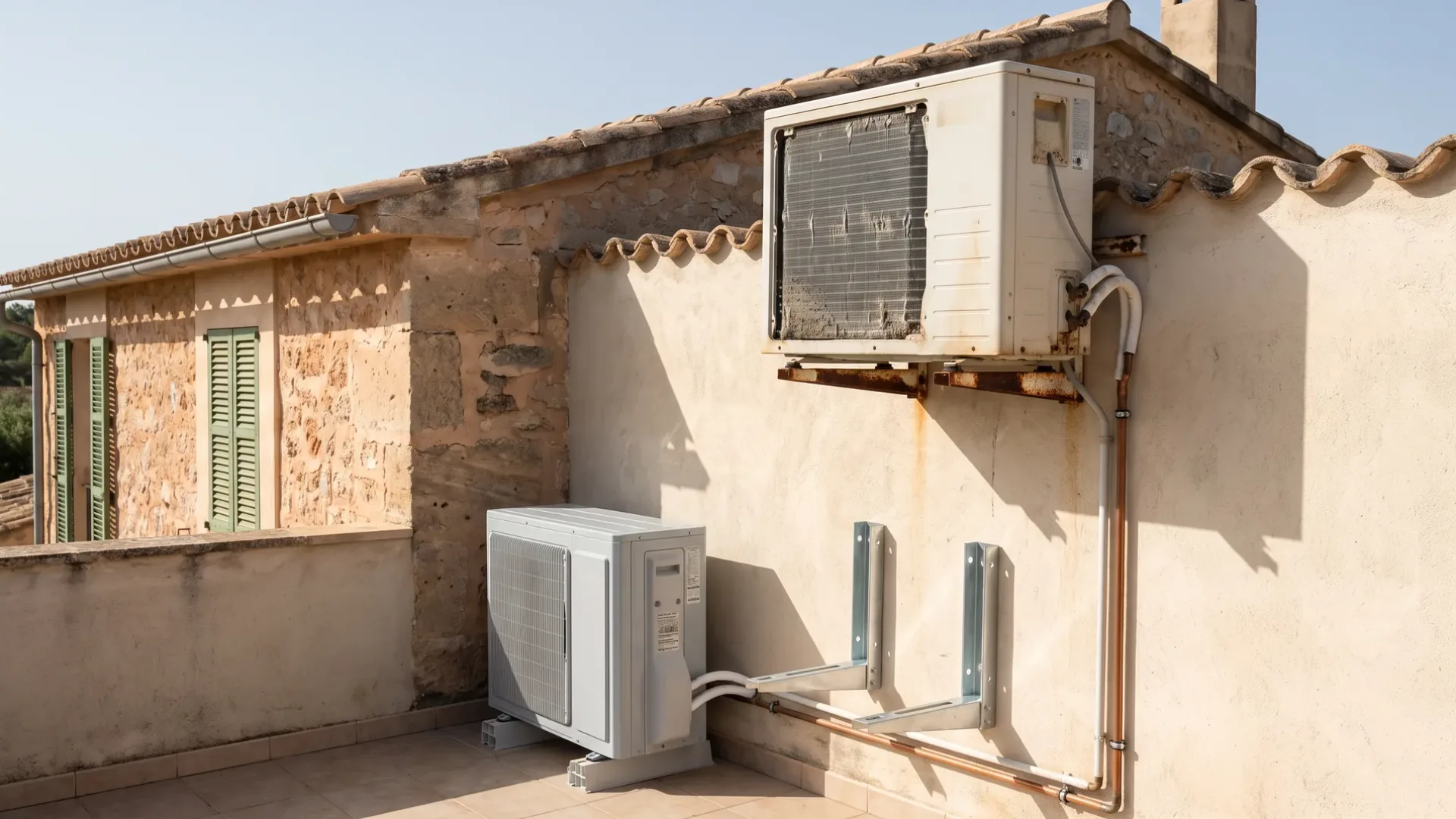
Air Conditioning Replacement in Mallorca
Most systems are not replaced because they stopped. They are replaced because the third repair cost as much as the second, the rooms never quite get cold any more, and the electricity bill has been quietly climbing for years. Describe what is installed now and we pass the request to air conditioning and heat pump companies in your area.
request describes the job
companies see it
for you, always
obligation to accept
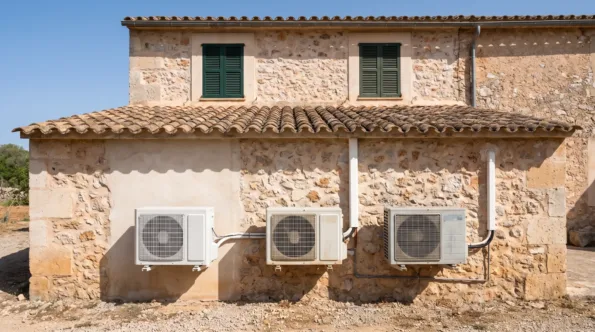
When replacing beats repairing again
There is no age at which a system becomes worthless. What matters is the pattern. One fault on a system that has otherwise run well is a repair. Three faults in two summers, on different parts, is a machine telling you something, and the next repair buys a few months rather than a few years.
The other signal is the refrigerant. Older systems were charged with gases that are no longer produced, which means a leak on one of them is not simply a leak: the fix depends on what can still be sourced, and the answer gets worse every year. A company should tell you what is in your system and what that means before it prices anything.
Then there is what the system costs to run. Efficiency has moved a long way, and a unit that runs flat out all afternoon to hold a room at a temperature it never quite reaches is spending money every day. That is the quiet argument for replacement and it rarely appears on a repair invoice.
Signals that point at replacement rather than repair
None of these decides it alone. Two or three of them together usually do.
- A second or third fault in the same or the following season
- Refrigerant that is no longer produced, so a leak becomes a supply problem
- Rooms that no longer reach the temperature they used to
- A unit running constantly instead of cycling
- Ice forming on pipework or on the indoor unit
- Noise that has changed, particularly from the compressor
- A repair quote that is a substantial share of a new system
- Electricity use rising with no change in how the property is used
- A system sized for a property that has since been extended or reglazed
How a replacement usually runs
Less work than a first installation, and more than swapping a box.
-
01
What is there now
The existing equipment, its age, its refrigerant, and how it was installed. This is also when the original mistakes come to light, because a replacement inherits them unless somebody looks.
-
02
Resize rather than match
A new system should be sized for the property as it is today, not copied from the label on the old one. Properties get extended, glazed and used differently, and the old capacity is evidence rather than an answer.
-
03
What can be kept
Pipework, cabling, drains and sometimes the brackets can often be reused, and sometimes must not be. Older pipework carried different oils, and the honest answer varies by system.
-
04
Removal
The old refrigerant has to be recovered rather than released, and the equipment taken away. Confirm this is in the price; it is a common omission.
-
05
Installation and commissioning
The new units mounted, the system charged, tested and set up, and the flow and temperatures checked under load.
-
06
Making good
Plaster, paint and trims where the old unit sat, which is rarely the same footprint as the new one.
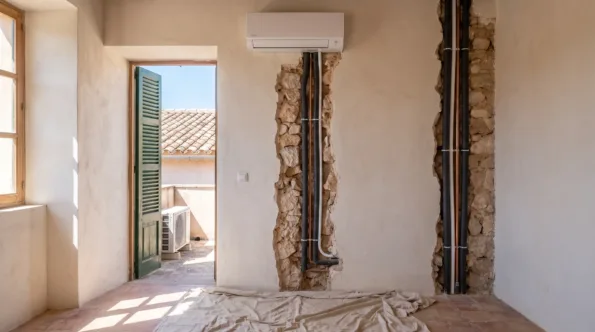
A replacement is a chance to fix the original installation
Most systems being replaced now were specified when the property was different or by somebody working quickly. The outdoor unit is in a hot corner with no airflow, the indoor unit blows straight at a sofa, one machine is trying to cool two rooms through a doorway, or the whole house is on a single thermostat in the coolest room in it.
None of that is worth fixing while the old system limps along, and all of it is cheap to fix while the equipment is coming off the wall anyway. Repositioning, splitting a zone, adding a second unit where one was always struggling, and putting the controller somewhere representative are the changes people are most glad of afterwards.
It is also the natural moment to decide whether the replacement is like for like or a change of system altogether. A property that has started being used in winter is a different brief from the one the old machine was bought for.
Where a replacement often leads
Ducted air conditioning
How your request reaches a company
Mallorca Climate Control is a comparison service. A request for an air conditioning replacement goes to the air conditioning and heat pump companies on our list; they quote the work and carry it out, and any agreement is between you and the company you pick.
-
01
Describe the job
Tell us the property, roughly what you want and where it is. Photographs and a rough plan help, though neither is required.
-
02
We match it
The request goes to companies that work in your area and take on this kind of job at this size.
-
03
They quote you
Each company contacts you directly with its own price, timing and approach. We do not set any of it.
-
04
You compare and choose
Put the quotes side by side and take the one you want, or none of them. Using the site costs you nothing.
How long does an air conditioning system last?
A well-installed system that is serviced tends to run for many years, and a badly installed one can fail early no matter what is done to it. Age on its own is a poor guide. The pattern of faults, the refrigerant it uses and what it costs to run are better ones.
Can the existing pipework be reused?
Sometimes, and it is worth asking rather than assuming either way. It depends on the size of the pipe, its condition, the route, and what the old system used, because older refrigerants ran with different oils. A company that intends to reuse it should say why it is safe to.
Can I replace just the outdoor unit?
Rarely, and less often than people hope. The indoor and outdoor units are matched to each other, so mixing an old indoor unit with new outdoor plant usually means neither performs as intended, and it can void what the equipment supplier will stand behind.
What happens to the old refrigerant?
It has to be recovered by whoever removes the system rather than vented, and the equipment taken for proper disposal. Ask whether that is included; it is one of the more common gaps between two quotes that otherwise look the same.
Is it better to replace everything at once?
If the systems are the same age and were installed together, usually yes, because the labour and the access are shared. If one unit is much newer, replacing that one on its own is reasonable, provided the new equipment is compatible with what stays.
Get air conditioning replacement quotes
Describe what is installed now and let several companies price the same brief.