

Indoor Air Quality
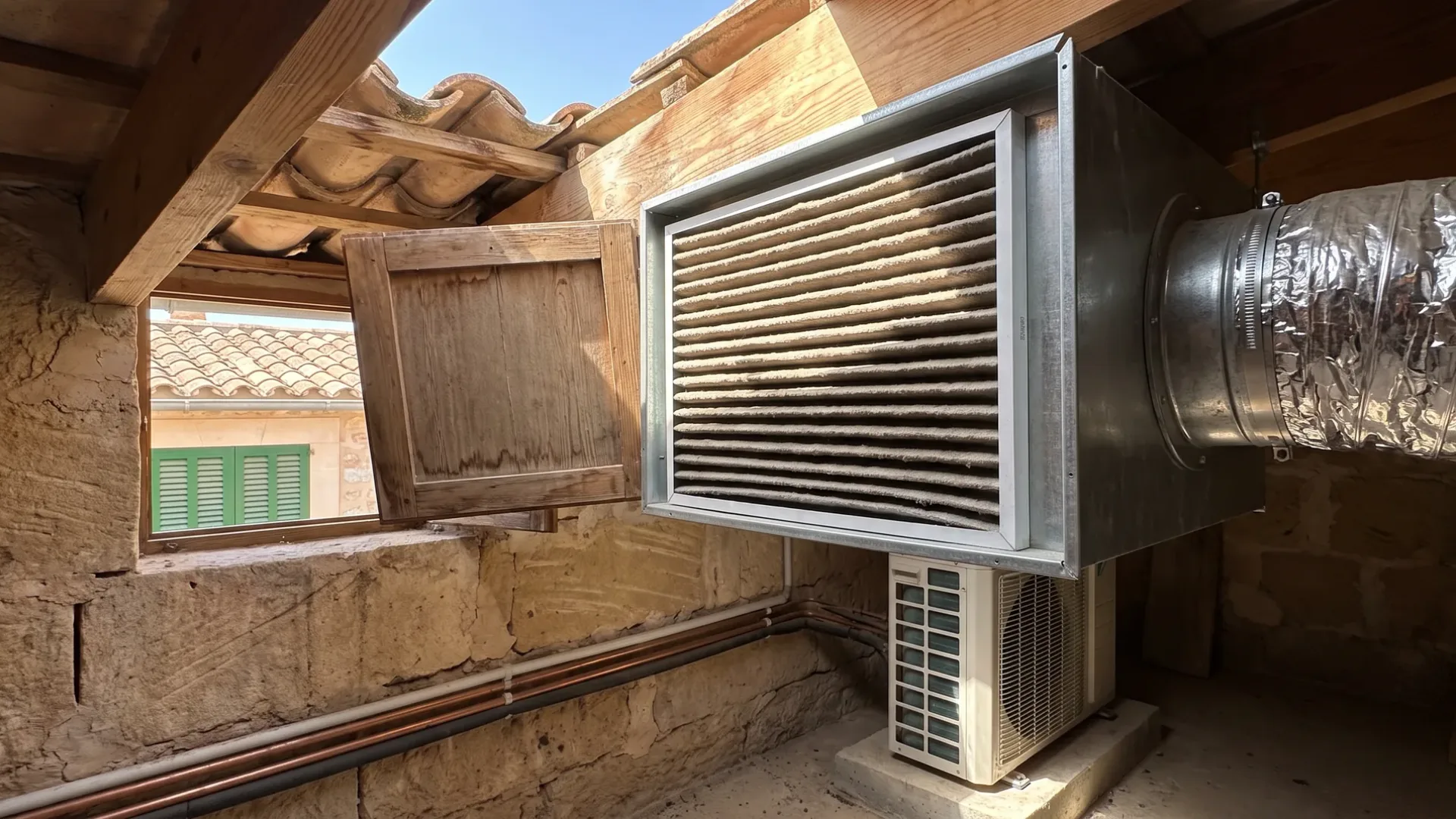
Air coming from outside carries things you may want to filter out. Air recirculated in a room carries the same things the system already caught yesterday and the day before. The difference matters. Fresh air brings in dust, pollen, salt and fine sand on a windy island, but it is constantly replaced by new air. Recirculated air goes through the same filter repeatedly, so the filter catches more, but nothing new comes in. Understand what filtration does, where the air is coming from, and whether a system brings in fresh air or just cleans the air that is already in the room. Let air conditioning and heat pump companies help you choose.
request describes the job
companies see it
for you, always
obligation to accept
What a filter actually does
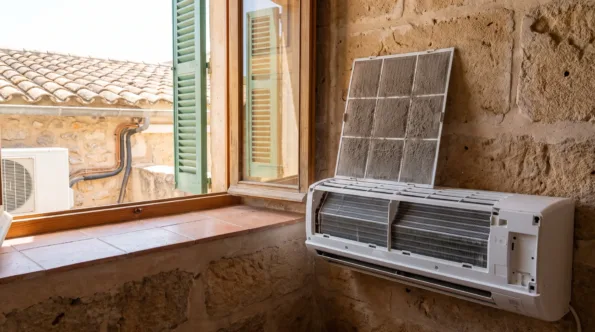
A filter is a material with small spaces that air flows through. Particles too big to fit through the spaces get stuck in the filter. The filter then catches those particles and the air that flows out the other side has fewer of them. That is all a filter does. It does not clean the air of gases. It does not change temperature or humidity. It does not stop cooking smell or bathroom moisture. What passes through to the other side depends entirely on the size of the holes in the filter material and the particles in the air.
Filtration grades are named by the size they can catch. A basic fibreglass filter catches large debris. A HEPA filter catches very small particles. A charcoal filter catches some gases and some particles. The grade is a choice made when the system is specified, and the cost and difficulty of air flow through the filter goes up with the grade. An undersized filter or a clogged one does not catch particles properly and forces the system to work harder.
The useful question is not how good the filter is. It is which air the filter is catching. A filter on a recirculating indoor air conditioning unit catches the dust that has already been in that room for days. A filter on an incoming duct on a ventilation system catches dust arriving from outside. The second one handles the things that actually come from outside, not things that are already there.
What comes from outside and what lives inside
These are the things a filter on fresh air supply can affect.
- Dust, which is everywhere and varies by season and wind
- Pollen, which varies by season and region
- Salt spray and salt particles near the coast, year-round
- Fine sand during calima events when wind arrives from the south
- Diesel soot and other particles from traffic, in towns and near roads
- Moisture from cooking and showers, which is made indoors and not filtered
- Smell from cooking, which is a gas and not filtered by particle filters
- Bacteria and viruses, which are in air everywhere and vary by population density
- The accumulation of whatever has been indoors for days, which a filter on recirculation catches
Understanding what goes where in a system
The path the air takes shapes what filtration does.
-
01
Air conditioning on recirculation
The indoor unit pulls air from the room, cools it and condenses some water out, and blows it back. A filter on this unit catches the dust that lives in the room. The air never comes from outside, so outside dust does not reach the filter at all. The room dust passes through the filter repeatedly.
-
02
Ventilation bringing in fresh air
Supply air comes from outside, passes through a filter, then goes to bedrooms and living rooms. The filter on the supply catches outside dust arriving right now. Extract air from bathrooms and kitchens goes through a return path. The system brings in new filtered air and sends stale air out.
-
03
Air conditioning with ducted supply and extract
A ducted system can be set to recirculate only, or to bring some fresh air in. The fraction that comes from outside depends on the installation. The louver that mixes the two is a choice made at the install stage. A system set to recirculate only never sees outside air at all. One set to draw part of its air from outside sits somewhere in between.
-
04
A hybrid: ventilation plus air conditioning
Some properties run ventilation to bring in fresh air and manage moisture, and separate air conditioning to cool that air if needed. The air conditioning then recirculates the air that ventilation brought in rather than pulling new outside air. That moves the filter upstream to the ventilation system.
Why ventilation is not air conditioning
Air conditioning cools the air in a room and removes some moisture from it by condensing water out on the indoor coil. It does this by recirculating the room air and pushing it back. The room does not get fresh air. It gets cooler, drier air made from the air that was already there.
Ventilation exchanges the air in a room for air from outside. If the outside air is drier, the room becomes drier. If outside air is fresher in some other way, the room becomes fresher. If outside air is dusty or smoky or humid, the room becomes dusty or smoky or humid. Ventilation always brings in whatever is outside, good or bad, which is why filters on ventilation systems matter.
A room can be at a comfortable temperature and still need one or the other or both. If the room is hot and stuffy, air conditioning handles temperature and recirculation handles heat. If the room is cool and stuffy, ventilation brings in fresh air. If the room is cool and humid, dehumidification or ventilation with dry outside air removes moisture. If the room is hot and humid, air conditioning cools it and recirculates but ventilation is still needed for freshness.
The related systems
Ventilation systems
Humidity control
Ducted air conditioning
Installation and duct choices
Air conditioning and what it does to air
Cost of filtration grades
How your request reaches a company
Mallorca Climate Control is a comparison service. A request for indoor air filtration goes to the air conditioning and heat pump companies on our list; they quote the work and carry it out, and any agreement is between you and the company you pick.
-
01
Describe the job
Tell us the property, roughly what you want and where it is. Photographs and a rough plan help, though neither is required.
-
02
We match it
The request goes to companies that work in your area and take on this kind of job at this size.
-
03
They quote you
Each company contacts you directly with its own price, timing and approach. We do not set any of it.
-
04
You compare and choose
Put the quotes side by side and take the one you want, or none of them. Using the site costs you nothing.
Do I need HEPA filtration or is basic filtration enough?
It depends on what is in the outside air where you live. A property far from traffic and towns might only need basic dust filtration. A property downwind of a busy road or near the coast in calima season might benefit from higher grades. The cost and difficulty of air flow go up with the grade, so oversizing the filter makes the system work harder without benefit. Ask what is actually in the air at your location.
If I have air conditioning, do I need ventilation for air quality?
Air conditioning cools and dehumidifies air by recirculating it. Fresh air is a separate question. An air conditioned room with no ventilation receives the same air again and again, which the filter has already worked on. Opening a window occasionally brings in outside air but loses the cooling. Ventilation brings outside air in continuously. For many rooms the answer is one or the other, depending on what matters more: temperature control or freshness.
How often do I need to change filters?
It depends on the grade and the air. A basic filter in a clean location might go three months. A high-grade filter or one in a dusty location might need monthly changes. Filters that are clogged do not flow air properly and make fans work harder. If you choose a high-grade filter, plan for regular maintenance or you will pay the cost in electricity.
Does a filter stop pollen?
Particle filters catch pollen. The grade of filter determines what size of pollen particles get caught. A basic filter catches large particles, a higher grade catches smaller ones. What matters is whether the air in your room comes from outside through that filter, or whether your air conditioning is recirculating inside air. A filter does no good if the air never passes through it.
Will better filtration reduce cooking smell?
Cooking smell is a gas, not a particle. Particle filters do not catch gases. Charcoal filters can catch some gases, but they fill up and stop working. The most effective approach is removing cooking smell at the source with an extract fan in the kitchen, or ventilating the room with fresh air, rather than trying to filter the smell out of stale air.
Get air quality and filtration quotes
Describe the building and what matters to you about the air, and let several companies recommend the right approach for your property.