

Climate Control for Second Homes in Mallorca
A property that is used for six weeks a year spends the other forty-six looking after itself, and a closed house on this island is a damp one. The system in a second home is doing two jobs: making it comfortable when you arrive, and keeping it in good condition when you are not there. Describe the property and we pass the request to air conditioning and heat pump companies in your area.
request describes the job
companies see it
for you, always
obligation to accept
What actually happens to a house that is shut up
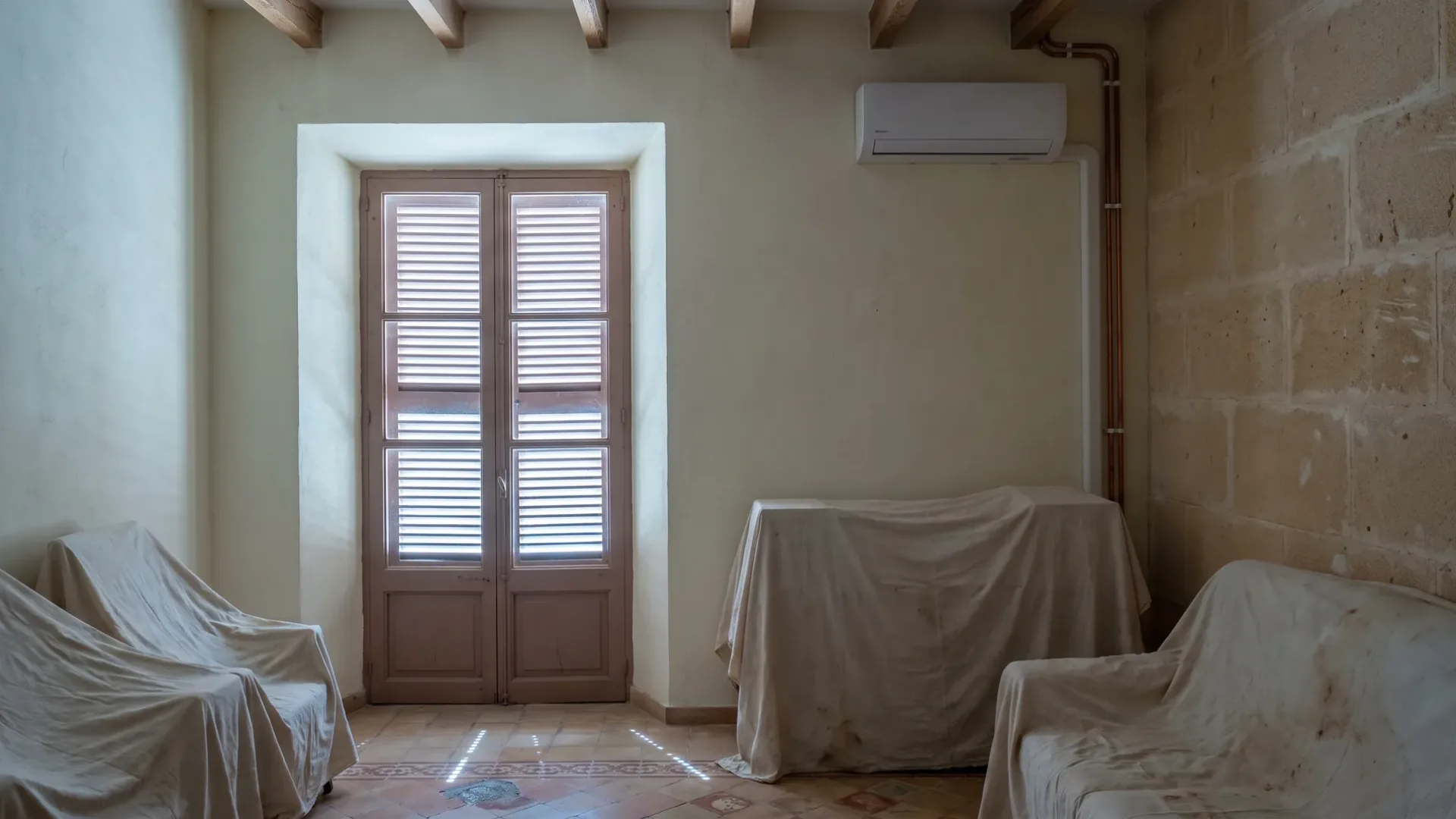
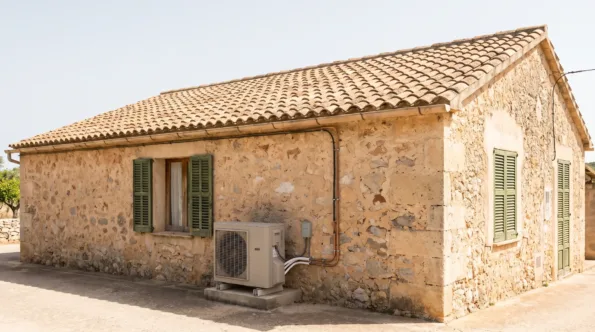
Humidity is the problem, not temperature. Shutters closed, windows sealed and nobody opening a door means moisture has nowhere to go, and in a heavy stone building the walls and floors stay cool enough for that moisture to settle on them. The result is the smell people describe as the house being closed, and behind it, mould on the north walls, spotting on leather and paper, and cupboards that have to be emptied.
Winter is worse than summer for this, which surprises owners who assume the risk is the heat. Warm damp air in spring meeting cold stone from January is exactly the condition that puts water on a wall, and it happens in the weeks nobody is there.
The cheapest protection is not a dehumidifier bought after the damage. It is a system that holds the building slightly above the point where that happens and lets you see, from wherever you are, that it is doing so.
What a second-home system is really being asked to do
- Hold a background condition rather than a comfortable one
- Keep humidity below the level where a closed house starts to suffer
- Be brought up to comfortable before an arrival, from anywhere
- Report what the property is doing, without anybody visiting
- Say something when a temperature or a humidity reading drifts
- Run for months with nobody to notice a dripping drain
- Give a caretaker or a manager access without handing over everything
- Cost almost nothing during the months the house is empty
The pattern that works for a house used in bursts
It is a control strategy more than an equipment choice, and it is decided at specification rather than found later.
-
01
A low background setting
Not comfort. Just enough to keep the fabric out of the range where damp settles, which costs very little because the house is not being conditioned for people.
-
02
Monitoring that reports
Temperature and humidity, visible from off the island, with an alert if either drifts. This is what turns a two-month problem into a phone call.
-
03
A pre-arrival schedule
The property brought up before anybody lands rather than on arrival, which matters more in a heavy building than a light one, because stone takes a day to change its mind.
-
04
Servicing timed to the empty season
A system that has not run for months is exactly the one that will fail on the first hot day. Servicing before the visit rather than after it is the whole argument.
What a second home usually needs
Smart climate control
Heat pump installation
Reliability is worth more than performance here
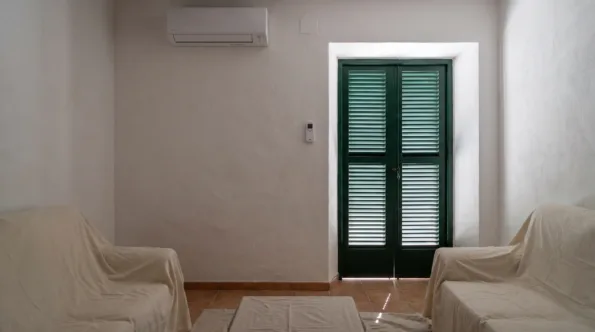
In a house somebody lives in, a fault is noticed the day it happens. In a second home it is noticed on the evening you arrive with luggage, which is the worst possible moment and usually a Saturday. That changes what is worth specifying.
Simple, well-installed equipment with somebody local who knows the property beats a clever system nobody on the island has seen. So does a system that keeps working when the internet does not, and controls that a caretaker or a cleaner can operate without an app and a password.
The other quiet reliability question is the drain. A condensate drain that blocks in an occupied house makes a mark on a ceiling. In an empty one it runs for weeks, and the repair is a plasterer rather than an engineer.
How your request reaches a company
Mallorca Climate Control is a comparison service. A request for climate control in a second home goes to the air conditioning and heat pump companies on our list; they quote the work and carry it out, and any agreement is between you and the company you pick.
-
01
Describe the job
Tell us the property, roughly what you want and where it is. Photographs and a rough plan help, though neither is required.
-
02
We match it
The request goes to companies that work in your area and take on this kind of job at this size.
-
03
They quote you
Each company contacts you directly with its own price, timing and approach. We do not set any of it.
-
04
You compare and choose
Put the quotes side by side and take the one you want, or none of them. Using the site costs you nothing.
Should I leave the system running while the house is empty?
Not at a comfortable temperature, and usually not off entirely either. A low background setting that keeps the building out of the damp range costs very little and prevents the problem that actually damages a closed house. What the right setting is depends on the building, and it is a fair question to put to whoever installs it.
Does air conditioning help with humidity?
It removes moisture as a by-product of cooling, so it helps in summer. In winter, when the damp problem here is worst, a cooling system is not doing anything, which is why properties that stand empty through the cold months often need background heating or a dedicated dehumidifier rather than air conditioning alone.
Can I switch it on before I arrive?
Yes, with remote control and a reliable connection at the property, and it is one of the strongest arguments for specifying it. A heavy stone house takes many hours to change temperature, so arriving to a property that has already been coming up for a day is a different experience from arriving and pressing a button.
How often should the system be serviced if we are barely there?
At least as often as in an occupied house, and timed before a visit rather than after one. Standing idle is its own kind of wear: traps dry out, drains silt up, and things that lived outside move in. A system that has run all summer in an occupied house is in some ways in better condition.
What if the internet goes down while we are away?
Then a system that depends on a connection stops reporting, and possibly stops being controllable. Ask what happens locally when that occurs, whether the schedule keeps running, and whether anybody near the property can operate it from the wall. This is worth deciding before the equipment is chosen.
Get climate control quotes for a second home
Describe the property and how often it is used, and let several companies price the same brief.