

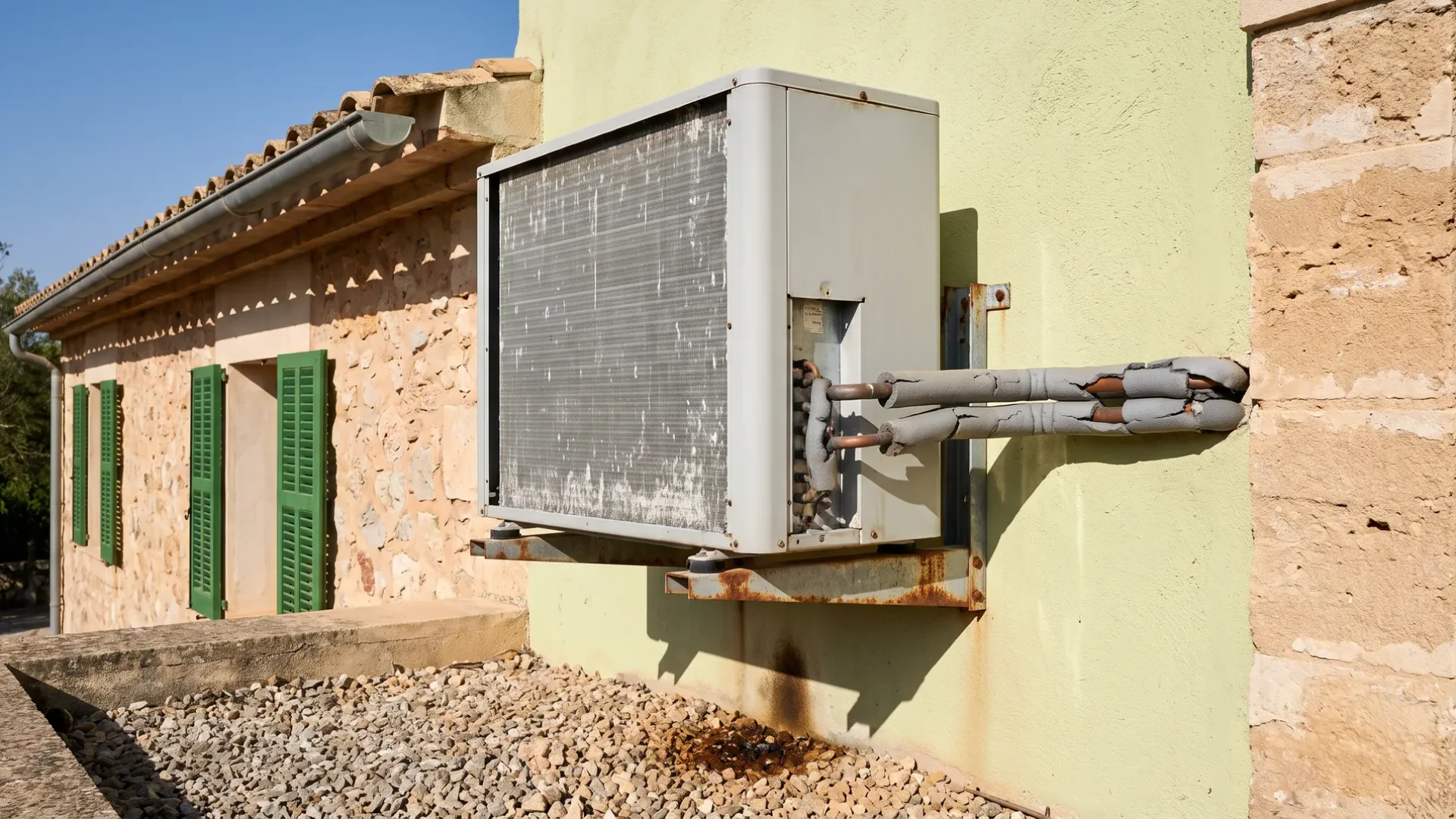
Heat Pump Replacement in Mallorca
A heat pump reaching the end of its life is a chance to fix what was wrong with the original install. The outdoor unit may have been in the worst place, the cylinder undersized, the thermostats in the wrong rooms, or the whole thing sized when the property was different. Replacing does not mean copying. Describe what is there now and we pass the request to air conditioning and heat pump companies that replace them.
request describes the job
companies see it
for you, always
obligation to accept
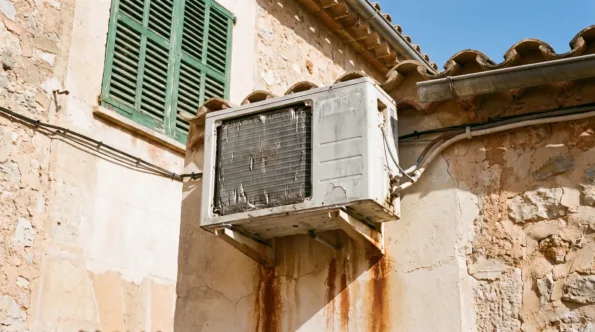
When replacing beats repairing again
A heat pump that has lost pressure, or has lost the gases it ran on, or simply no longer heats quickly enough is not inherently finished. The question is how much it costs to fix and how long the repair will last. If a leak appears in the refrigerant circuit, that is expensive work the second time around, and the third time it happens is a signal.
The second signal is efficiency. A unit that has been running for ten or fifteen years costs more in electricity than one built today using the same technology. The longer a heat pump runs, the more the running cost of replacement eventually falls below the running cost of keeping the old one. That calculation changes if the property is now heated all winter instead of only part of it.
Flow temperature tells its own story. If the original machine was sized to heat old radiators at seventy degrees, a replacement sized properly for the building now might be happy at fifty-five. The old system was efficient nowhere; the new one could be efficient everywhere, provided the radiators are replaced or accepted as the constraint they are.
Signals that point at replacement rather than repair
- A leak that has happened twice, or a loss of pressure with no visible leak to fix
- Refrigerant that can no longer be sourced because the machine uses a banned gas
- Flow or return temperatures that the system no longer reaches under load
- A unit that no longer modulates but runs flat out to meet the demand
- Noise from the compressor that has changed character
- The property has been extended or fully glazed since the system was installed
- A replacement quote that is less than the cost of the repair plus two more years of running
How a replacement usually runs
Often shorter than a first install, but not straightforward.
-
01
Understanding the old system
What it heats, how it heats it, and what the current flow temperatures and cylinder volumes are. This is also when it becomes clear whether the old setup was sized for the property or for a different problem.
-
02
Sizing the new one properly
Not copying the label on the old unit, but working from how the building actually loses heat now, with its current glazing and its current use. A bigger unit is not better and a smaller one does not save money.
-
03
Deciding what to keep
The cylinder, the pipework, the underfloor pipes or radiators, and the buffer tank can sometimes be reused, and sometimes are better replaced. Older cylinders had different insulation. Older radiators may not work well at the lower temperatures the new machine will produce.
-
04
Removal and disposal
The old refrigerant must be recovered and the machine itself disposed of properly, not left in a skip. Confirm this is in the price.
-
05
Installing the new machine
Outdoor unit positioned better than the last, pipework, controls and the cylinder wired up, and the flow temperatures set for what is actually installed this time, not guessed.
-
06
Commissioning and handover
The system run under load, curves configured, and the controls explained so it does not repeat the mistakes of the old one.
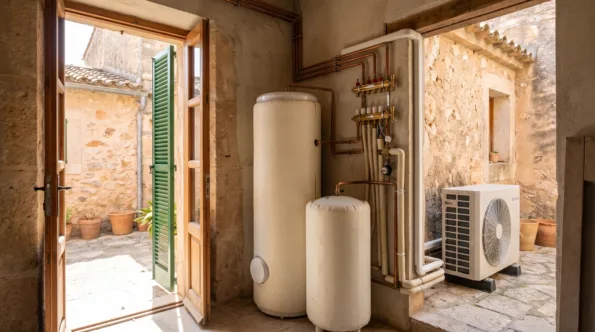
A replacement is the moment to fix the original mistakes
Most heat pumps being replaced were installed in a hurry or for a property in a different state. The outdoor unit is in the sun or blocked, the cylinder was too small and was never upgraded, the whole property is on one thermostat in a cold room, or the heating was set to run like a boiler instead of like a heat pump.
None of that is worth fixing while the old system still limps along. All of it is cheap to fix while the equipment is coming off the wall anyway. Moving the outdoor unit to an unshaded corner, swapping the cylinder for a bigger one, splitting the heating into zones and putting controls in representative rooms are the changes people are most grateful for after the install.
It is also the moment to think about whether you are replacing like for like or changing entirely. A property that is now occupied all winter needs a different answer than one that was only used in summer when the old machine was bought.
Where a replacement might go instead
Underfloor heating
How your request reaches a company
Mallorca Climate Control is a comparison service. A request for a heat pump replacement goes to the air conditioning and heat pump companies on our list; they quote the work and carry it out, and any agreement is between you and the company you pick.
-
01
Describe the job
Tell us the property, roughly what you want and where it is. Photographs and a rough plan help, though neither is required.
-
02
We match it
The request goes to companies that work in your area and take on this kind of job at this size.
-
03
They quote you
Each company contacts you directly with its own price, timing and approach. We do not set any of it.
-
04
You compare and choose
Put the quotes side by side and take the one you want, or none of them. Using the site costs you nothing.
Can I reuse the same outdoor location?
Sometimes. If the old unit was in the shade, badly sited or blocked, the new one should move. If it was in an unshaded corner with good airflow, that corner is still the best place. A company that visits will tell you whether the old location suits the new one.
What happens to the old refrigerant?
It must be recovered and disposed of properly by whoever removes the system, not vented. Ask whether that is included in the quote; it is a gap on more than one occasion.
Can I replace just the outdoor unit?
Rarely usefully. The indoor and outdoor halves are matched to each other, and mixing an old indoor unit with new outdoor plant usually means neither works as designed. It can also void what the supplier will support.
Will the new system run the old radiators?
It can, but the radiators determine the flow temperature and that determines the efficiency. If they were sized for seventy degrees, running them at that temperature makes the machine work harder and use more power. It is a trade-off worth understanding before the install.
Is a replacement a good time to add cooling?
Yes, if the building will use it. A heat pump does both. If only heating was ever wanted, making it reversible is a small cost and a decision the owner can ignore, so there is no reason not to include it.
Get heat pump replacement quotes
Describe what is there now and let several companies price the replacement.