

Heat Pumps for Villas
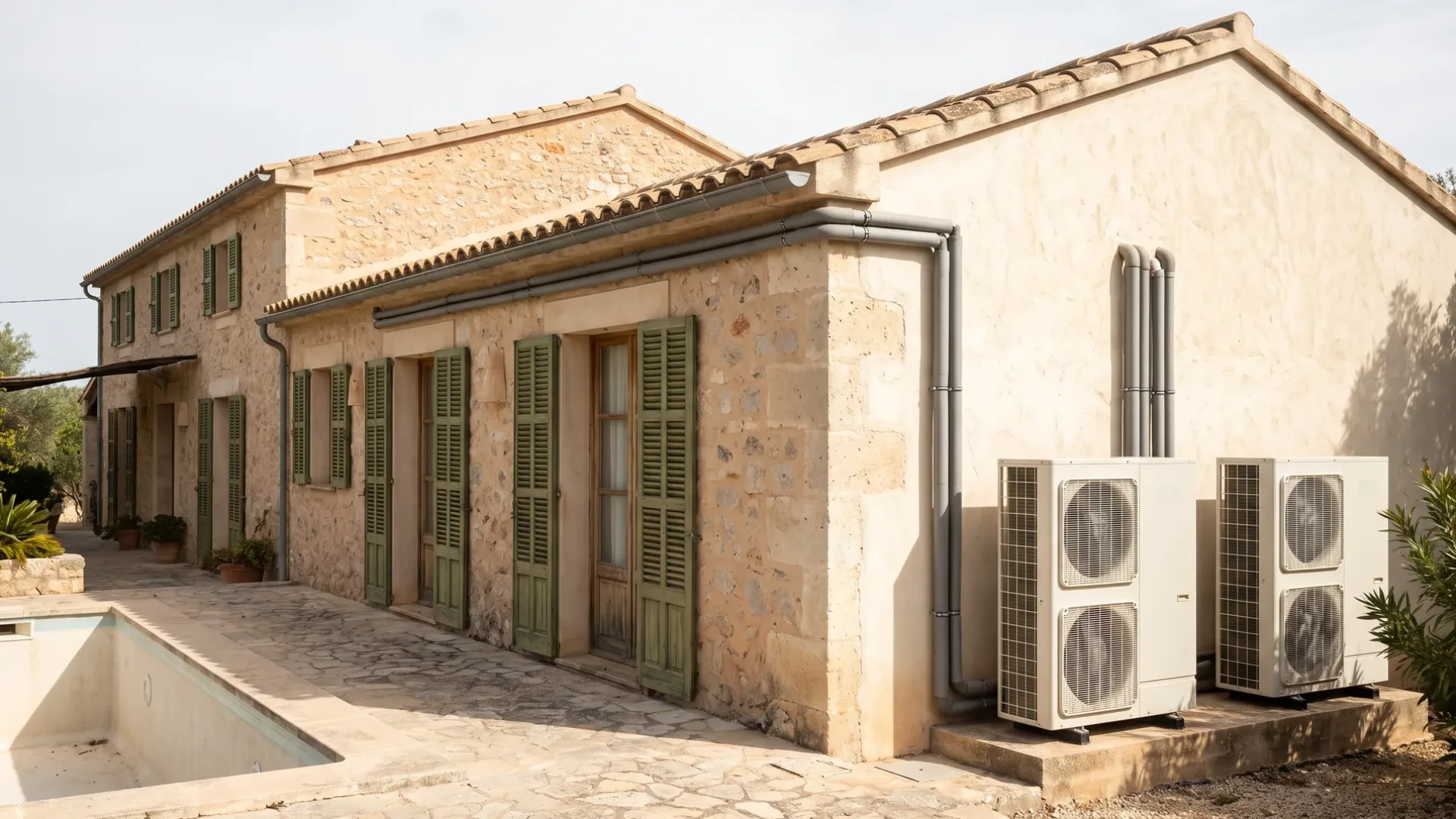
A villa is a different problem from a flat. There is more volume, stone that takes time to warm, often a pool, and a property that may stand empty through winter or be occupied only weekends. A heat pump sized for the building and zoned sensibly is efficient for a villa. Oversized or left running all day for an empty house, it is expensive. Describe the villa and we pass the request to air conditioning and heat pump companies that understand the difference.
request describes the job
companies see it
for you, always
obligation to accept
Why a villa is a different brief
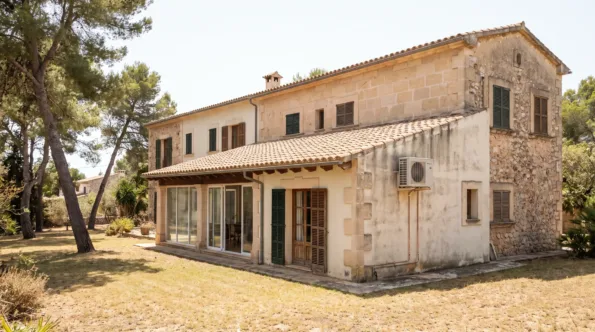
A villa has bigger rooms and higher ceilings than a flat, which means there is more air to heat or cool and the surface area that loses or gains heat is larger. That usually means the load is larger, and the heat pump must be larger. But a villa also often has stone or heavy masonry in the walls, which means the building itself stores temperature. Heat it steadily and it holds the warmth for hours after the system stops. Cool it and the same property stays cool even through a warm afternoon, provided the timing is right.
The second difference is that a villa is often split into zones: guest wings, living spaces and bedrooms that are not all occupied at once or not all needing the same temperature. A heat pump feeding underfloor pipes can zone more naturally than an air-to-air system can, and the control system is the thing that makes it work. A villa with a good control system runs efficiently. One with a bad one runs like a cruise ship with all the corridors heated.
The third difference is absence. A property that is empty for two months in August because the owners are elsewhere, or closed through winter, or only used weekends, has heating and cooling being asked to catch up when occupied and keeping the house empty the rest of the time. That is where a heat pump works or fails based on how it is set up.
What a villa heat pump usually includes
More than a small property because the space and the absence need handling.
- A unit larger than would fit a smaller building of the same volume
- Underfloor heating fed from the same machine, with water temperature low enough to be efficient
- Multiple zones, each with its own thermostat and the ability to heat only occupied wings
- A buffer tank that smooths out the thermal swings and protects the compressor
- A pool heating option, since the building already has the plant room and the hot water
- Smart controls that allow the owner to set different schedules for absent and occupied periods
- A layout that allows the property to be brought to temperature gradually, not all at once
- Planning for summer cooling as well as winter heating, using the stored thermal mass
How a villa heat pump install usually unfolds
More steps than a small property because the survey is larger.
-
01
Understanding how the villa is used
When it is occupied, when it stands empty, how many people usually stay, and which wings are actually heated or cooled in each season. This is the step that fixes most mistakes later.
-
02
Sizing by the whole building, not the peak load
The heat loss calculation has to account for the volume and the surface area, not just the number of bedrooms. A villa with high ceilings and stone walls loses heat differently from a bungalow of the same floor area.
-
03
Deciding on zones
Which areas heat or cool together, which can be switched off, and which need to be kept at a baseline temperature even when empty. The zones are what make the difference between efficiency and waste.
-
04
Planning the distribution
Underfloor pipes for the main living areas, radiators or fan coils for bedrooms and wings, and how to let the same machine feed them all at the right temperature. This is also when the pool plant room gets planned if one is needed.
-
05
Installing the system
The outdoor unit positioned away from the villa so it does not dominate the garden, the indoor plant room set up, and the distribution run while the site is already disturbed for other work.
-
06
Programming the controls
The heating curves set for the building, the zones programmed, and the schedules set for absent periods. This is where the efficiency really lives.

Making a villa heat pump work for absence
A villa that is empty nine months a year should not be heated to living temperature nine months a year. It should be brought to a baseline temperature, just enough to protect the building from damp, and only heated to comfort when occupied. A good control system lets the owner set that schedule remotely, so the property can be at comfort temperature when they arrive without running all winter.
The other piece is the thermal mass. A villa with stone walls, a tiled floor and underfloor heating takes hours to warm to comfort, but it also holds that warmth for hours after the system stops. Using that mass properly is the difference between heating efficiently and fighting against the building all the time. A company that is used to flats knows this less well than one that is used to villas.
The third thing is understanding the difference between the property that is empty and needs no heating at all and one that is empty but needs frost protection and damp control. A property in a hot climate can be left alone. A stone villa in a cool winter needs just enough warmth to stay above damp, which is a different schedule from a property that is occupied.
Related to villa climate
Villa climate control
How your request reaches a company
Mallorca Climate Control is a comparison service. A request for a villa heat pump installation goes to the air conditioning and heat pump companies on our list; they quote the work and carry it out, and any agreement is between you and the company you pick.
-
01
Describe the job
Tell us the property, roughly what you want and where it is. Photographs and a rough plan help, though neither is required.
-
02
We match it
The request goes to companies that work in your area and take on this kind of job at this size.
-
03
They quote you
Each company contacts you directly with its own price, timing and approach. We do not set any of it.
-
04
You compare and choose
Put the quotes side by side and take the one you want, or none of them. Using the site costs you nothing.
Can a heat pump handle a property with high ceilings?
Yes, but the sizing is different. High ceilings mean more volume of air to heat or cool, which usually makes the unit larger than a flat of the same floor area. The heat loss calculation has to account for the volume, not just the footprint.
Should a villa heat pump also heat the pool?
If the building already has the plant room and the hot water is being generated, adding a heat exchanger to warm the pool is usually cheap compared to running a separate pool heater. The question is how much pool heating matters against the load it puts on the compressor in summer.
How do I keep a villa at a baseline temperature while empty?
A good control system lets you set different schedules for absent and occupied periods, and most can be managed remotely. Ask about this specifically when comparing quotes; it is where the difference between efficient and expensive really lives.
Is underfloor heating worth doing in a villa?
In a villa with stone walls and high ceilings it is often better than radiators or fan coils, because the low water temperature suits the heat pump and the thermal mass of the floor works well with the heating strategy. It is not required, but the two suit each other.
What is a buffer tank and do I need one?
A buffer tank smooths out the temperature swings and protects the compressor from short cycling. A villa with underfloor heating and zones benefits from one more than a small property with one zone does. Ask the company whether they include one; it is not always standard.
Get villa heat pump quotes
Describe how the villa is used and let several companies price the system.